
Active Warrants in York County
Warrants in York County are issued by judicial officers, mostly magistrates. The York County Courts page states that magistrates issue search and arrest warrants and conduct bond and preliminary hearings. The Clerk of Court's duties include receipt of criminal warrants. So a warrant is born in a magistrate or General Sessions setting, and the Clerk keeps the filed record. The Solicitor may control prosecution decisions, while the court controls the warrant and any later orders.
York County does not publish a separate active-warrant portal in its official sources. There is no live sheriff warrant list to browse. Instead, warrant information shows up inside criminal case records. General Sessions and Magistrate criminal cases can be searched through the South Carolina Public Index, and warrant-related entries may appear in a case's Actions and Associated Cases tabs. The data is tied to a case, not to a standalone public warrant feed, and it updates as the court records the activity.
The 16th Circuit handles York County prosecutions. The 16th Circuit Solicitor's Office site covers General Sessions cases, juvenile matters, and pretrial intervention. The screenshot below shows that office.
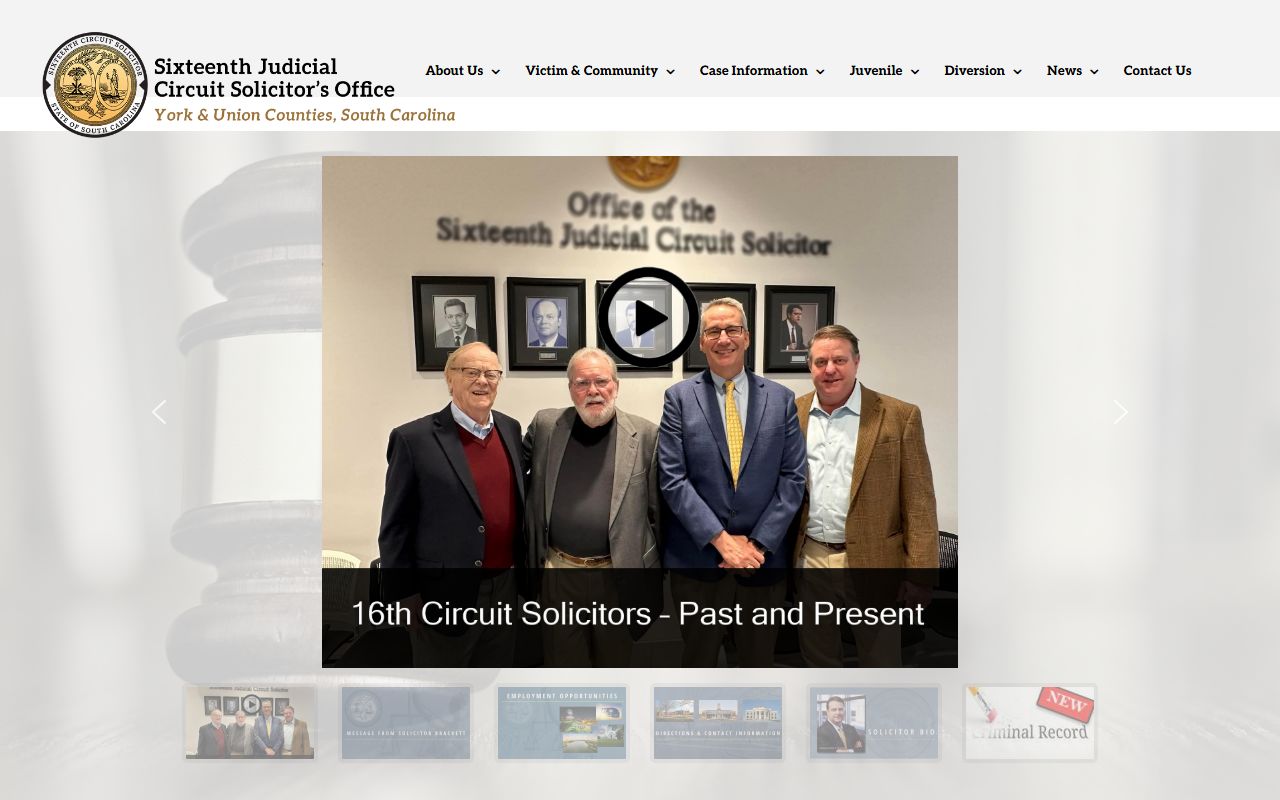
Because the warrant lives inside a case, the case is what you search. The Solicitor and the Clerk handle different parts of that case, but the public record runs through the Clerk and the Public Index.
Types of Warrants in York County
Warrants come in several forms, and each does a different job. Some authorize an arrest. Some authorize a search. Others react to a missed court date or unresolved obligation. Knowing the type helps you understand what a record means and which office to call. The definitions below cover the warrant types you are most likely to see in York County records.
- Arrest warrant
- Issued by a magistrate or judicial officer to arrest a person accused of a crime.
- Bench warrant
- A court order for arrest after a failure to appear or other court noncompliance.
- Search warrant
- Judicial authorization to search a place, person, or property; it may stay confidential while active.
- Capias
- A custody order often tied to a failure to appear or an unresolved court obligation.
- Fugitive warrant or hold
- May involve an out-of-county, out-of-state, or federal agency request.
- Civil enforcement warrant
- May relate to contempt or child support; not all are public in the same way.
Search warrants are often not public before they are executed, and they may stay sealed after if disclosure would harm an investigation. Family Court warrants and orders carry their own confidentiality and safety rules.
How to Search York County Warrants
Since there is no standalone warrant portal, the practical search is a criminal-case search on the York County Public Index. You look for the person by name or case number, then read the case for warrant-related activity. The Public Index covers Circuit Court, including General Sessions, plus Magistrate and other trial-court records. It is free, but the browser must allow cookies and JavaScript, and a pop-up exception is sometimes needed to open case detail.
- Open the York County Public Index, read the county disclaimer, and click Accept.
- Enter the security code and click Validate, since pressing Enter does not work here.
- Search by defendant name or case number, then review General Sessions and Magistrate criminal cases.
- Open the Actions and Associated Cases tabs to find warrant-related entries, then confirm custody on the inmate roster if needed.
The York County Public Index is the front door for these records. The statewide Commission on Prosecution Coordination also publishes pending General Sessions warrant reports, which describe warrants reported to a county or circuit clerk as pending. For recent custody status after an arrest, the York County inmate records roster is the better tool.
York County Warrant Search Fields
Because warrant data lives inside criminal cases, the search fields are the Public Index fields. There is no dedicated warrant form. The most useful inputs are a defendant name or a case number, with date filters to narrow results. Results match every field you enter, so over-filtering is a common reason a real case looks missing. Start with one or two fields.
| Field Label | Type | Required | Notes |
|---|---|---|---|
| Last Name | Text | Yes | Use the Contains option for partial or differently entered names. |
| First Name | Text | No | Pairs with the last name to narrow results. |
| Case Number | Text | No | The cleanest search; avoids name duplicates. |
| Date Type / Range | Date | No | Filed, disposed, or arrest date used with a date range. |
| Security Code | Text | Yes | Click Validate before the search screen; Enter does not work. |
An arrest date can be used as a date type in the Public Index, which helps when you know roughly when the case began. The Solicitor or the court, not a search box, confirms whether a warrant is currently enforceable.
What a York County Warrant Record Shows
A warrant rarely appears as a tidy standalone document. It shows up as part of a criminal case record on the Public Index. The fields you can expect to see come from the underlying case, and only those filed and public will display. Sealed or active investigative warrants will not appear. The list below covers the fields drawn from York County court records.
- Defendant name
- Case number
- Court type and agency
- Charge description
- Warrant or indictment action entries, where public
- Bond amount or status, if set and public
- Disposition and associated cases
The table below maps the key record fields to what each one tells you.
| Field | What It Shows |
|---|---|
| Warrant / Action Entry | Whether a warrant or indictment action is logged on the public docket. |
| Arrest Date | A Public Index date type marking when the case began. |
| Charge | The criminal charge linked to the case and any warrant. |
| Bond Amount | The bond set, if any, shown as a custody and release data point. |
| Issuing Court | The Magistrate, General Sessions, or other court that handled it. |
A warrant can be connected to a public case yet still not be visible as its own scanned document. Treat docket entries as a guide, not as confirmation that a warrant is still active.
Bond Court and Warrant Arrests
When a warrant leads to an arrest, Bond Court is usually the first stop. York County Bond Court sits inside the Detention Center at Moss Justice Center. It runs 365 days a year, 24 hours a day, with a magistrate on duty at all times. New arrestees often appear before a bond magistrate for a release decision, continued detention, or transfer. This is why Bond Court matters so much right after a warrant is served.
The court is open continuously, not just during business hours. The York County Courts page describes Bond Court and how it connects to the jail. The screenshot below shows that overview.
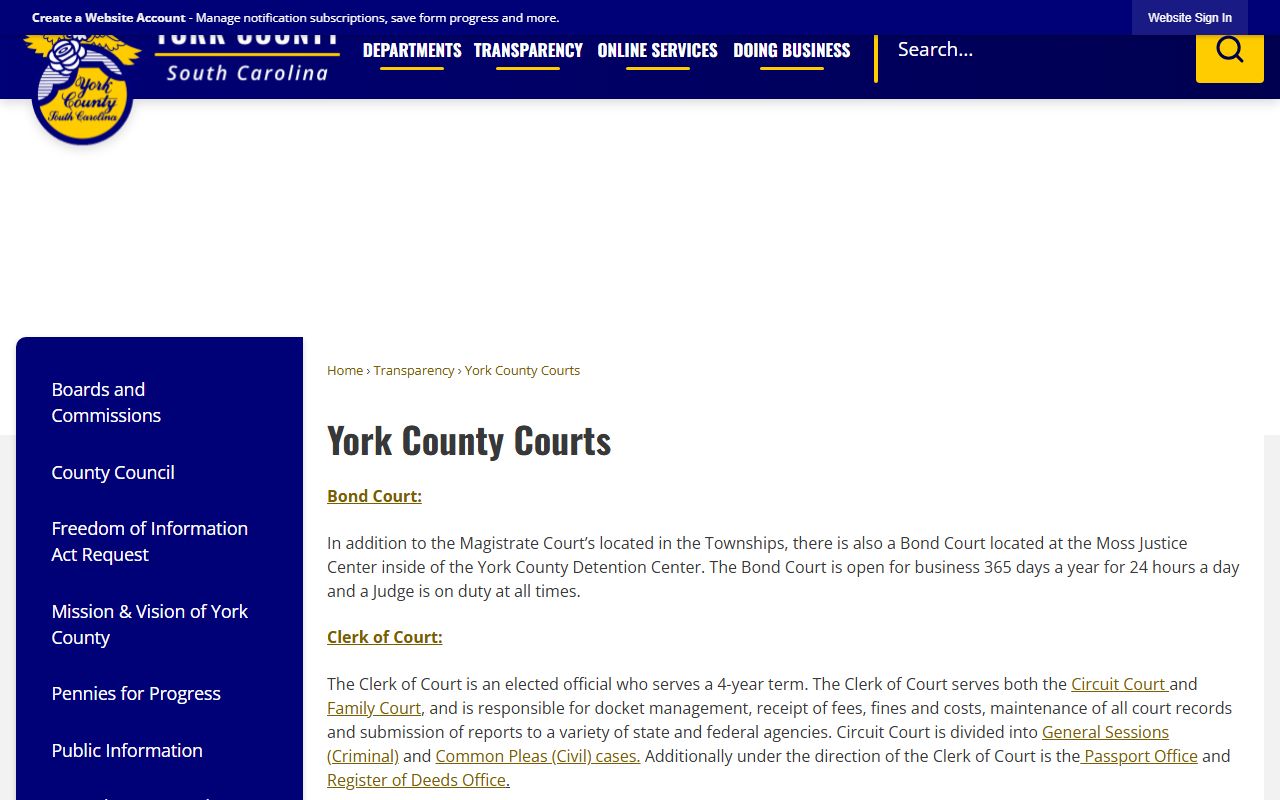
A bond decision does not end the case. A person can receive bond and still face later Magistrate, Municipal, or General Sessions hearings on the same charge.
What to Do If You Have an Outstanding Warrant
An outstanding warrant does not go away on its own. The safest path is to confirm the details and act through official channels, not a third-party site. Start by finding the court and case number, then get legal advice before you decide how to respond. The steps below outline how to resolve a warrant in York County.
- Confirm the court and case number from the Public Index or an official court notice.
- Contact a criminal-defense attorney or the Public Defender if you qualify.
- Contact the issuing court for appearance or surrender instructions; do not ask a third-party site.
- If the person is in custody, use the roster booking number and bond information.
- Appear at Bond Court or the issuing court as directed.
- Pay any court-ordered amounts only through official court or approved payment systems.
- After resolution, recheck the Public Index, since updates may not be instant.
The magistrate listings name the bond and township courts. The York County Magistrates page is shown below.
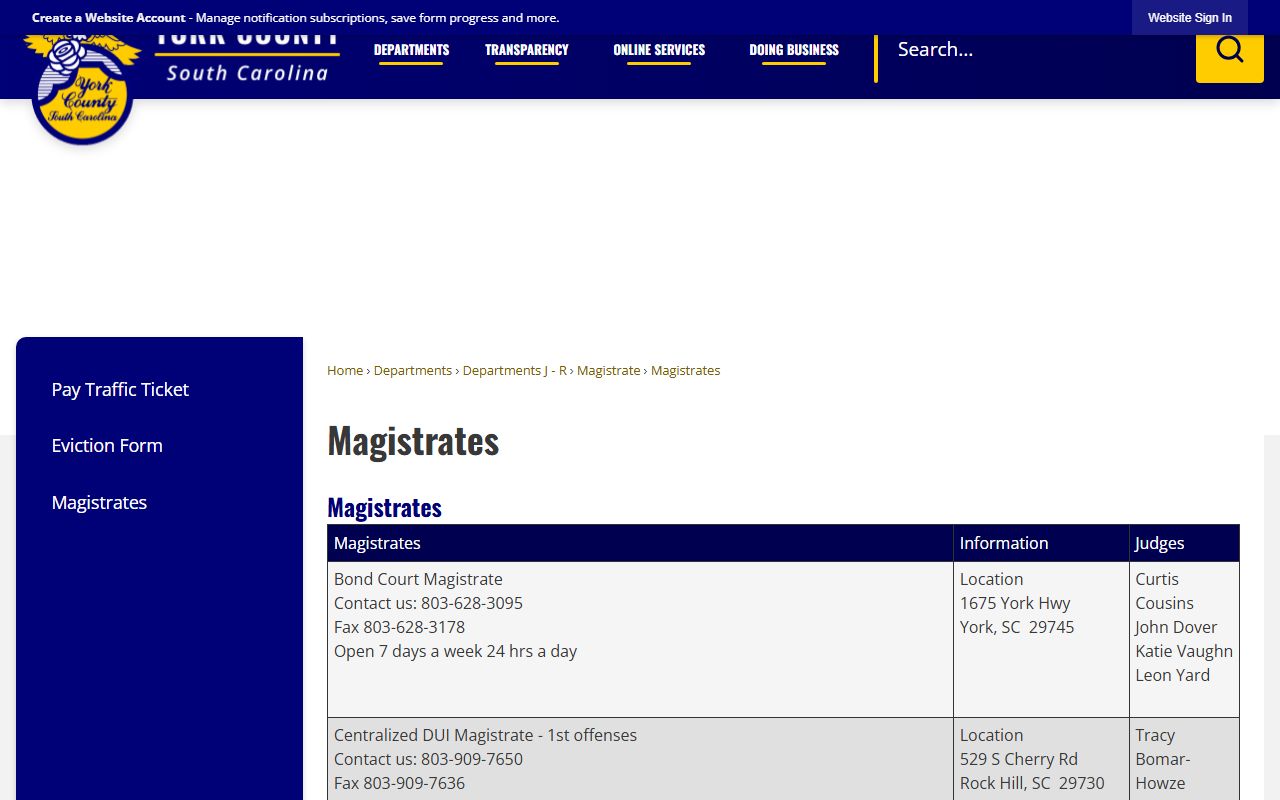
Important: Do not rely on a website screenshot to decide whether to appear in court; talk to a lawyer before turning yourself in, since warrants can be recalled, transferred, or reissued.
Which Office to Contact First
The right first contact depends on the warrant type. For summary-court traffic warrants, the issuing Magistrate or Municipal Court is usually the best starting point. For General Sessions matters, the Solicitor may control prosecution while the Clerk keeps the filed record and the court controls the warrant. For child-support contempt or other Family Court orders, Family Court rules can limit what is public and how it is handled.
If you are unsure where a case sits, the Public Index helps you identify the court and case number first. From there you can reach the right office. The York County Circuit Court page explains the General Sessions and Common Pleas split, and the court records page covers how to read a full case file.
Restricted York County Warrant Records
Some warrant records are closed. Active search warrants are often not public before they are executed, and they may stay sealed after if disclosure would compromise an investigation. Sealed indictments may not be public until unsealed. Juvenile matters are confidential and should not be treated as ordinary public criminal records. Federal warrants and fugitive holds may involve agencies outside the county.
This is why a public docket can hint at a warrant without showing the document itself. A warrant can be recalled, served, transferred, or reissued at any time, so the public record is a snapshot, not a live status. Always confirm current enforceability with the court or the law enforcement agency that holds it.