
Arrest Records in York County
Arrest records in York County are made by law enforcement, not by a court clerk. When a person is arrested, the York County Sheriff's Office books them into the Detention Center at Moss Justice Center. The booking creates the first record. It logs the name, the date and time, the arresting agency, and each charge. A booking photo is taken too. The Sheriff's Office runs the jail and holds people until they post bond, a court orders release, or they are sentenced and transferred to a state facility.
An arrest record is not proof of guilt. It only shows that an arrest and booking happened. The next stage is the criminal court record, which begins when a prosecutor files charges. That court file lives with the Clerk of Court and the courts, and it is searched a different way. For full case history, charges, pleas, and sentencing, see York County court records. This page focuses on the arrest and booking side first.
The York County Inmate Information page explains the jail's role and how detention works. It is the official starting point for arrest and custody questions.
How to Search York County Arrest Records
The fastest route to recent York County arrests is the Sheriff's current inmate roster. It is free and open to the public. The roster posts current booking information only, so it shows who is in custody right now. You search by last name, and results return a photo, booking data, the total bond, and a charge grid that lists each charge and the arresting agency. The page notes that only current booking information is available, so it is not a long-term history tool.
- Open the York County current inmate roster and find the last-name field.
- Type the last name, then click Search by Last Name.
- Use Sort by Last Name to list and page through results when there are many hits.
- Click an inmate photo or record to see booking date, charges, arresting agency, and total bond.
The York County Detention Center roster is shown below, with the last-name search and result count near the top.
For someone who has already left the jail, the roster will not help, since it only carries current bookings. Past arrests show up through later court filings or a statewide criminal history check. The York County inmate records page covers the roster in full detail.
Arrest Records vs. Criminal Court Records
An arrest record and a criminal court record come from two different offices and answer two different questions. The arrest record is built at booking by the Sheriff. The court record is built later by the Clerk of Court once charges are filed. One shows custody. The other shows what the court did with the case. A person can be arrested and never charged, or charged without ever being booked on the roster. Treat the two as separate files.
| Arrest Record | Criminal Court Record | |
|---|---|---|
| Source | York County Sheriff / arresting agency | Clerk of Court and the courts |
| Created When | Booking at the Detention Center | Charges filed in General Sessions or Magistrate Court |
| Contents | Booking date, charges, arresting agency, mugshot, bond | Indictments, motions, pleas, sentence, disposition |
| Where to Search | Detention Center inmate roster | South Carolina Public Index |
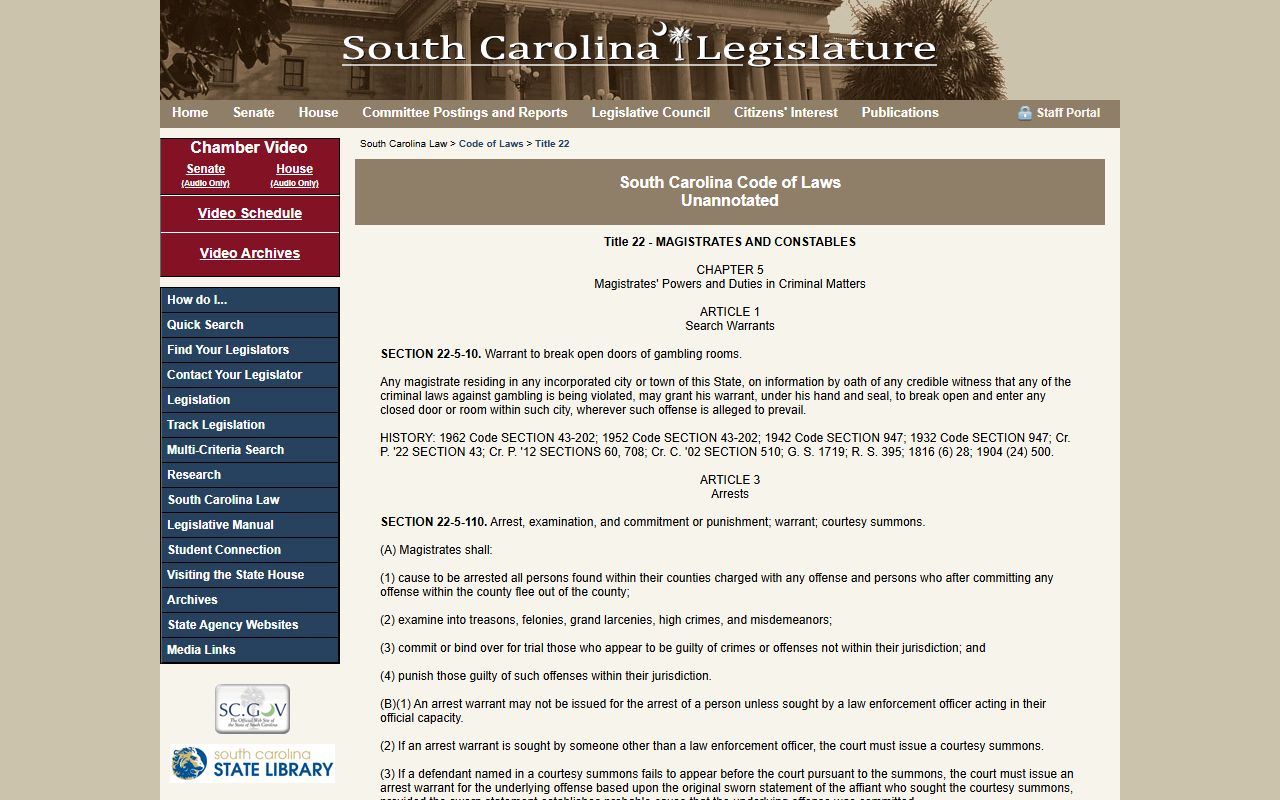
General Sessions handles serious criminal cases for the county, and the Clerk receives criminal warrants and indictments. The magistrates' criminal procedure statutes govern how summary-court criminal and traffic matters move, including first-offense expungement references. The image above shows that section of the code.
Charges vs. Convictions
A charge is not a conviction. This is the single most important thing to understand when reading any York County arrest record. A charge is an accusation. It means law enforcement or a prosecutor believes there is enough cause to bring the matter to court. A conviction comes later, only if there is a guilty plea or a verdict of guilty. Many charges end in dismissal, a not-guilty finding, or nolle prosequi, which means the prosecutor dropped them.
| Charge | Conviction | |
|---|---|---|
| Stage | Accusation at or after arrest | Verdict or guilty plea |
| Burden of Proof | Probable cause | Beyond a reasonable doubt |
| Public Record | Yes, unless sealed | Yes, unless expunged |
| Where Shown | Arrest roster, then docket | Disposition line in the court record |
When you read a court file, watch the disposition line. That is where the real outcome sits. The charge grid on a jail roster tells you what a person was booked for, not what a judge decided. For the full path from charge to disposition, the court records page walks through the docket.
Sealed vs. Expunged Records
Sealed and expunged sound alike but work in very different ways. A sealed record still exists. It is just closed to the public. An expunged record is destroyed or removed from public criminal systems, so it is treated as if it never happened. In South Carolina, most criminal expungement applications run through the solicitor's office in each circuit. For York County, that is the 16th Circuit Solicitor's Office. Expungement is not a delete-anything process, and only certain case types qualify.
| Sealed | Expunged | |
|---|---|---|
| Visibility | Hidden from public | Destroyed or removed, treated as never existed |
| Law Enforcement | Limited access | Very limited access |
| Eligibility | By statute or court order | Dismissed, not-guilty, PTI, conditional discharge, first-offense, YOA, juvenile |
| Administered By | The court that holds it | 16th Circuit Solicitor, summary courts for some cases |
The governing law is found in the state code. South Carolina's expungement statutes set out which categories the solicitor can process, such as fraudulent check, conditional discharge, first-offense magistrate convictions, the Youthful Offender Act, pretrial intervention, and dismissed or not-guilty charges. After expungement, S.C. Code § 17-1-40 can require destruction of arrest and booking records, associated bench warrants, mug shots, and fingerprints for qualifying dismissed, discharged, or not-guilty charges.
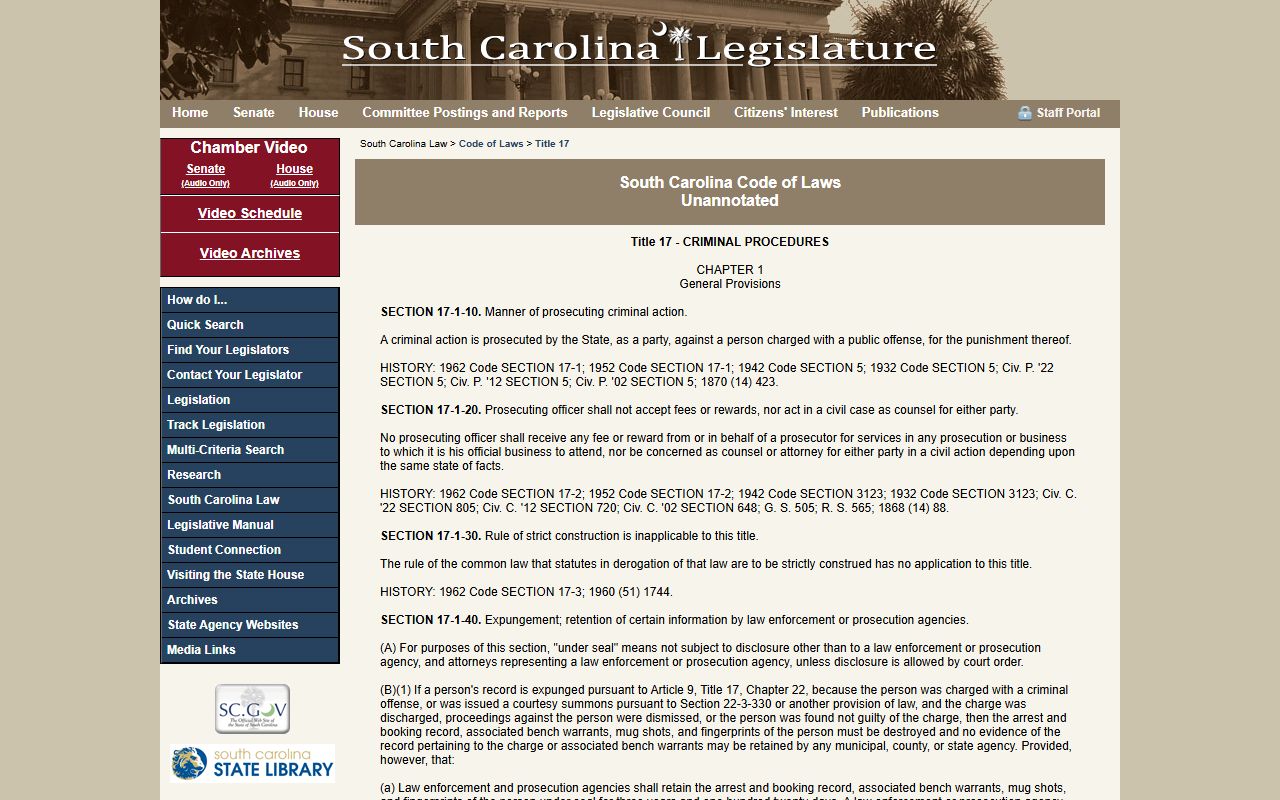
That destruction provision is why an old arrest may no longer appear after a successful expungement. The image above shows the criminal-procedure general provisions, including the destruction rule.
Expungement Through the 16th Circuit Solicitor
York County sits in the 16th Judicial Circuit, shared with Union County. Most General Sessions and qualifying criminal-record expungements go through the 16th Circuit Solicitor's Office, not through a private service. The solicitor reviews the application, confirms the case type qualifies, and routes the signed order to the agencies that hold the records. Summary-court expungements can involve handling by the summary court itself under the expungement chapter.
A petition can fail for several reasons. Common ones include a nonqualifying offense type, later convictions, unpaid court obligations, a missed waiting period, an incomplete application, or a disposition that does not match the statutory category. The South Carolina circuit solicitors list names the 16th Circuit Solicitor and links the office. The screenshot below shows that statewide listing.

The processing and distribution of completed orders is set out in S.C. Code § 17-22-950, with summary courts carrying specific duties for summary-court expungements. Always confirm eligibility with the solicitor before filing.
Key Statutes:
S.C. Code § 17-22-910 - lists the criminal-record categories eligible for expungement through the solicitor's office.
S.C. Code § 17-1-40 - requires destruction of arrest, booking, mugshot, and fingerprint records for qualifying dismissed or not-guilty charges.
Mugshots and Booking Photos
The York County Detention Center roster displays booking photos. Each current inmate listing shows a thumbnail, and the image links to a full-size booking photo. These mugshots are public while the person is in custody and on the current roster. They sit next to the booking data, the charge grid, and the total bond. The roster is the official place to view them, and it is free.
Mugshots tied to a dismissed or not-guilty charge can be destroyed after a qualifying expungement under S.C. Code § 17-1-40. That is the lawful path to removal. York County's official roster carries only current bookings, so a mugshot drops off once the person leaves custody. The county does not run a permanent public mugshot archive. Be cautious with third-party mugshot sites, which often keep old photos online and may charge to take them down.
Statewide Criminal Records Search
A York County arrest roster search is not a full criminal history. For a statewide criminal background check, the official route is the South Carolina Law Enforcement Division, known as SLED, through its CATCH system. A name search on the county Public Index is case-specific court access, not a complete record of a person. Mixing the two is a frequent mistake. SLED is the agency built to compile criminal history across the state.
If you only need court case information for York County, the South Carolina Public Index covers General Sessions, Magistrate, and other trial-court records by name or case number. For broader criminal-history checks, SLED is the proper source. The county roster, the Public Index, and SLED each answer a different question, so pick the tool that matches your need.
Background Check Considerations
Many people search arrest records for a reason that the law treats with care. Hiring, housing, and lending decisions fall under the federal Fair Credit Reporting Act. A casual roster lookup is not the same as an FCRA-compliant background check. If a decision affects credit, employment, a tenant, or insurance, the law requires a regulated consumer report through a proper agency. A free public roster does not meet that bar.
Important: This site is not a consumer reporting agency under the FCRA, and its information may not be used for credit, employment, tenant, or insurance screening.
Restricted Criminal Records in York County
Not every York County arrest or criminal record is open. Several categories are closed by statute or court order. Juvenile records are confidential under the state Juvenile Justice Code, so they should not be treated as ordinary public criminal records. Mental-health and involuntary-commitment records are protected as well. Active investigation materials, confidential informant data, and sensitive personal information can be withheld or redacted under the Freedom of Information Act exemptions.
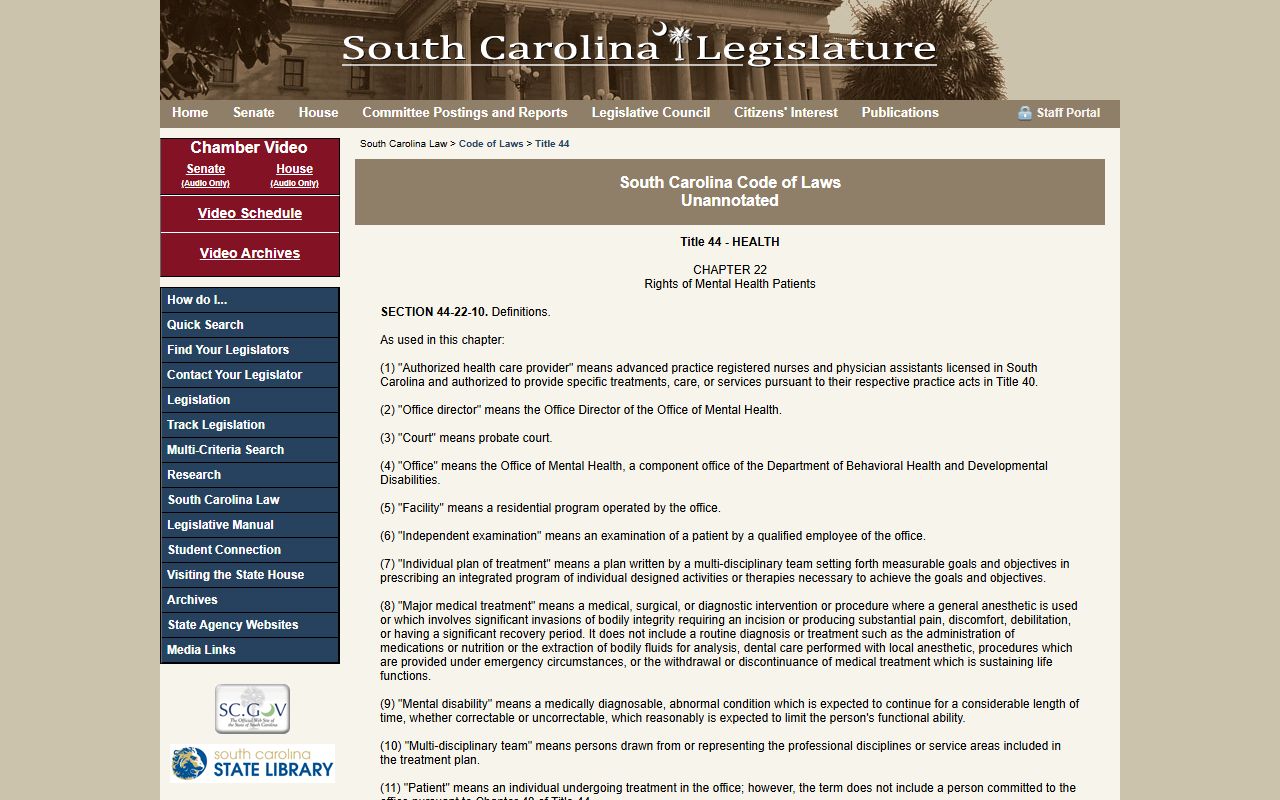
Juvenile confidentiality comes from S.C. Code § 63-19-2010, which limits access to the judge, the child's attorney, and others authorized by the chapter or a court order. Mental-health confidentiality comes from S.C. Code § 44-22-100, which protects records that identify a patient or a person whose commitment has been sought. The two screenshots below show those code sections.
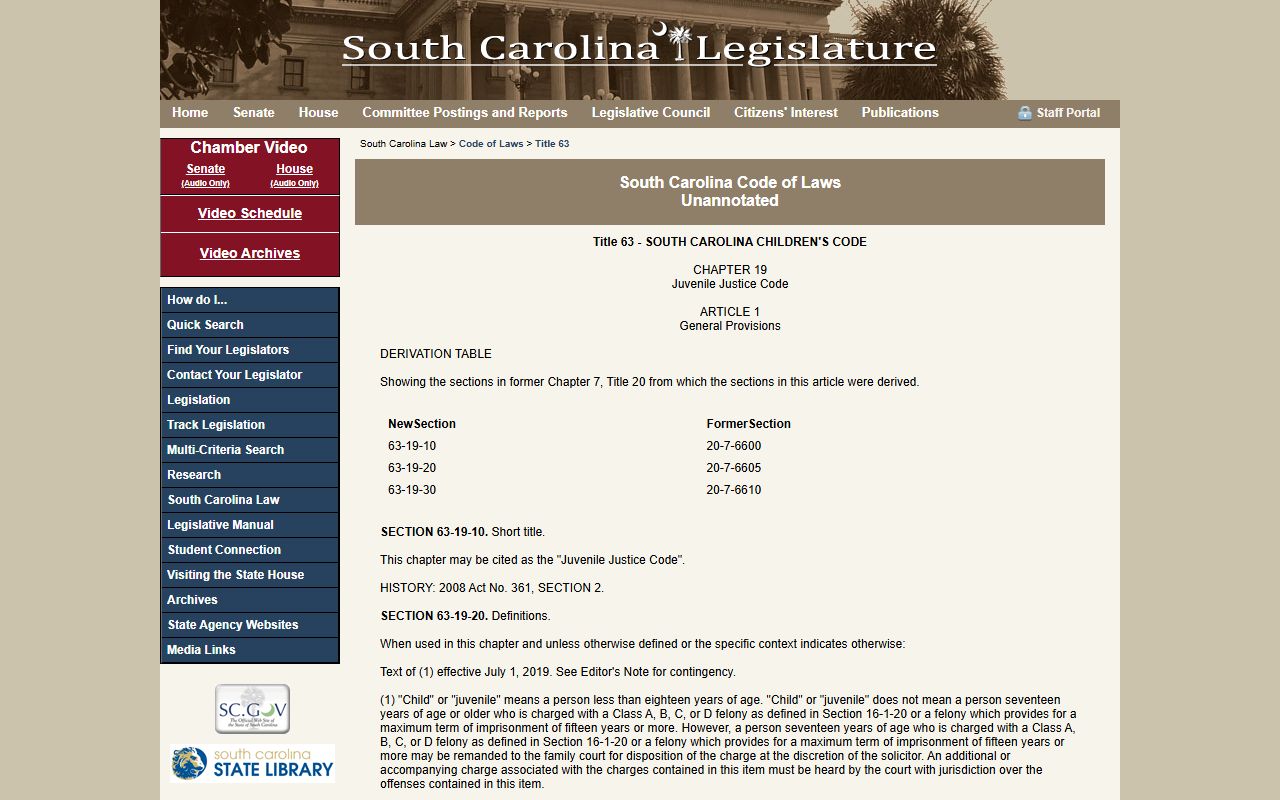
Juvenile arrest and court records are kept apart from the adult system for good reason. The next image shows the mental-health confidentiality provisions, which apply to commitment proceedings begun through local providers.
Sealed cases do not appear on the Public Index at all, and expunged charges are removed from public criminal systems. The broader access framework, including the Freedom of Information Act, is covered through the South Carolina expungement chapter and related statutes referenced above.
South Carolina Criminal Procedure and York County Cases
York County criminal cases run on South Carolina's criminal procedure rules. After an arrest and booking, a magistrate often handles the first bond decision, and the case may move to General Sessions for serious charges. The statewide framework for criminal procedure, including the destruction of records after certain dispositions, sits in Title 17 of the state code. This is the backbone for how arrest records can later be removed.
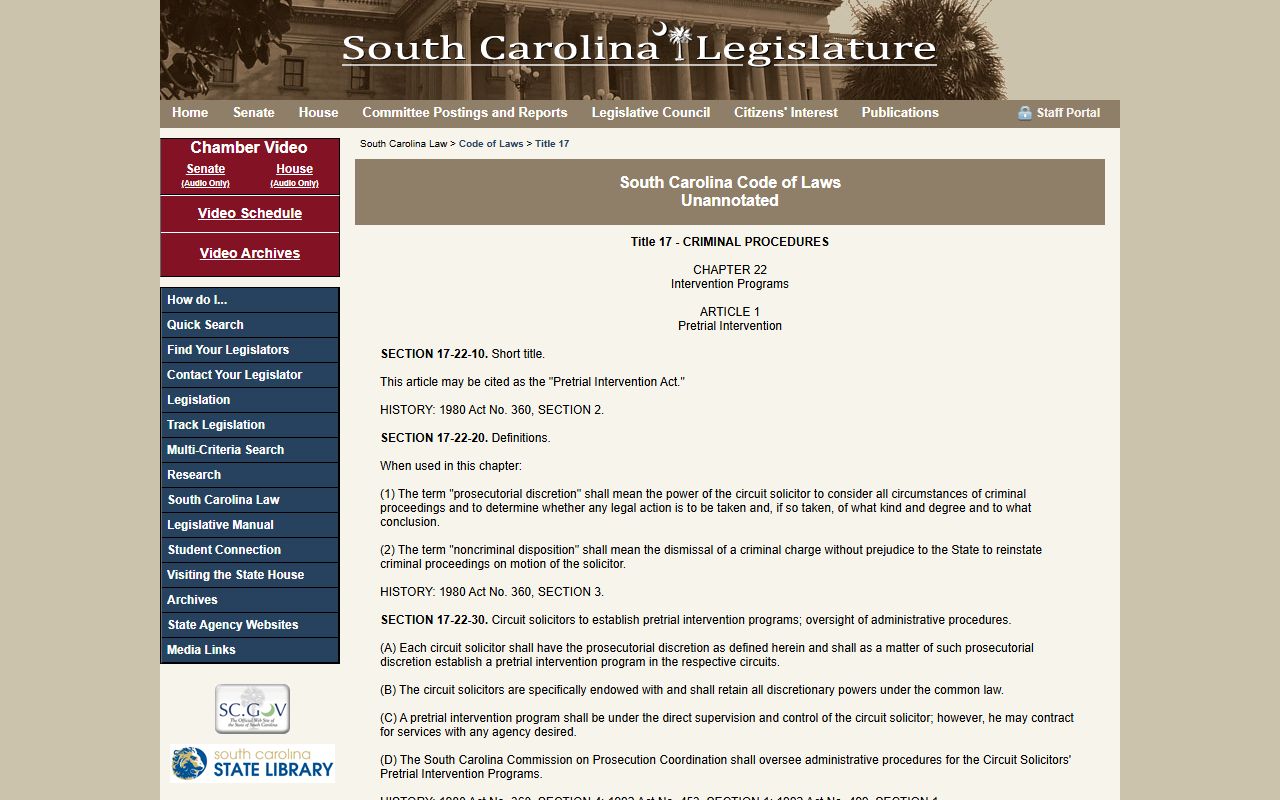
The general provisions of South Carolina criminal procedure set the baseline, while magistrate-level procedure is its own chapter. For first-offense matters, the magistrates' criminal procedure statutes include first-offense expungement references that often matter for minor charges. The image below shows the South Carolina expungement chapter referenced throughout this page.
Reading the right chapter helps you understand whether an arrest record can be cleared and who handles it. The solicitor, the summary court, and the agencies that hold records each play a part.